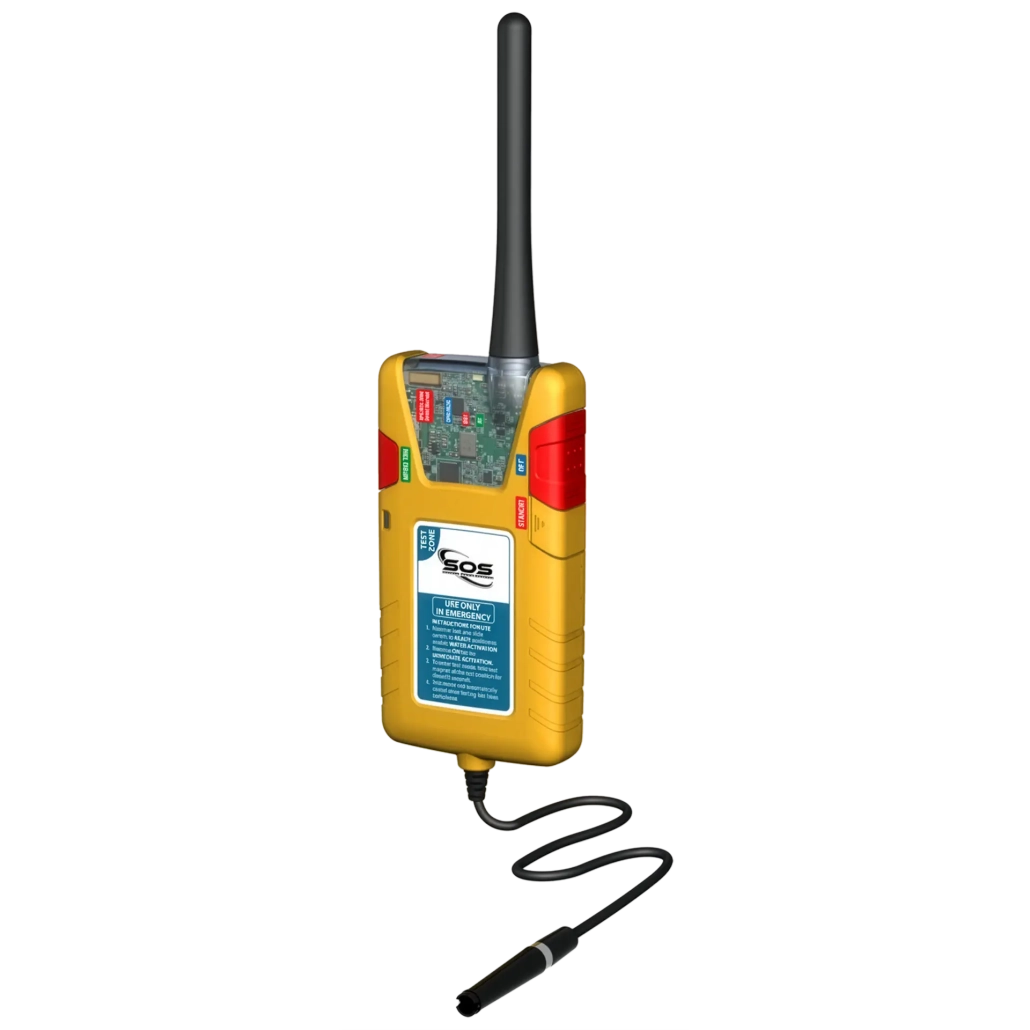
HJ9018
AIS/DSC MOB Beacon
The HJ9018 combines the wide broadcasting power of AIS with the targeted alarm triggering of DSC, plus Two-Way Acknowledgment so you know your signal was heard.


The professional-grade HJ9018 is our most advanced MOB beacon, designed to guarantee your rescue when survival is on the line. The DSC (Digital Selective Calling) transmission on Channel 70 triggers automatic alarms on DSC-equipped VHF radios aboard nearby vessels — even if they’re not actively monitoring AIS.
Delivers both an unignorable audible VHF alarm (DSC) and a pinpoint visual chartplotter target (AIS).
High-precision GNSS receiver quickly locks onto your coordinates, broadcasting a position accurate to within meters.
Seamlessly combines a high-visibility LED survivor light and a powerful AIS MOB Beacon and a DSC MOB Beacon, reducing the bulk and clutter inside your lifejacket.
Built-in flashing LED light maximises visual detection for search crews in rough seas and low light.
Triggers automatically upon lifejacket inflation, with a failsafe manual override.
Premium standby power ensures the beacon is ready when you need it most.
As maritime safety regulations evolve, understanding equipment standards is crucial for crew safety.
Comprehensive Alerting: New Class M regulations (ECC/DEC/(22)02) introduce mandatory DSC (audible alarm) requirements to enhance localised rescue capabilities. While precise visual tracking via AIS remains critical, an AIS/DSC beacon ensures the distress signal is also communicated audibly via Digital Selective Calling (DSC). This means a compliant beacon not only plots the casualty’s exact GPS location on nearby chart plotters through AIS but also triggers a proactive, piercing audible alarm on all DSC-equipped VHF radios within range, ensuring the alert cannot be missed.
Cutting Through the Clutter: A primary goal of modern maritime safety standards is to separate human distress calls from commercial markers, such as fishing nets, which can cause dangerous congestion on standard AIS channels. An AIS/DSC beacon ensures your emergency signal is prioritised as a critical man overboard target on receiving screens, preventing it from being lost in everyday marine traffic. Furthermore, by meeting strict Class M standards, these dual-technology beacons are legally authorised to operate on designated globally monitored distress frequencies.

Unlike traditional localised beacons that rely solely on a visual screen target, an AIS/DSC MOB Beacon combines two powerful maritime communication technologies into one compact device:
AIS (Visual Tracking): Transmits a highly accurate, localised GPS signal that plots your exact location, drift, and distance as a distinct, flashing red target on the digital chartplotters of all nearby vessels.
DSC (Audible Alarm): Simultaneously broadcasts a high-priority digital distress signal over VHF Channel 70. This instantly triggers a piercing, automated audible alarm on all DSC-equipped marine radios within range, immediately alerting crews even if no one is looking at a navigation screen.
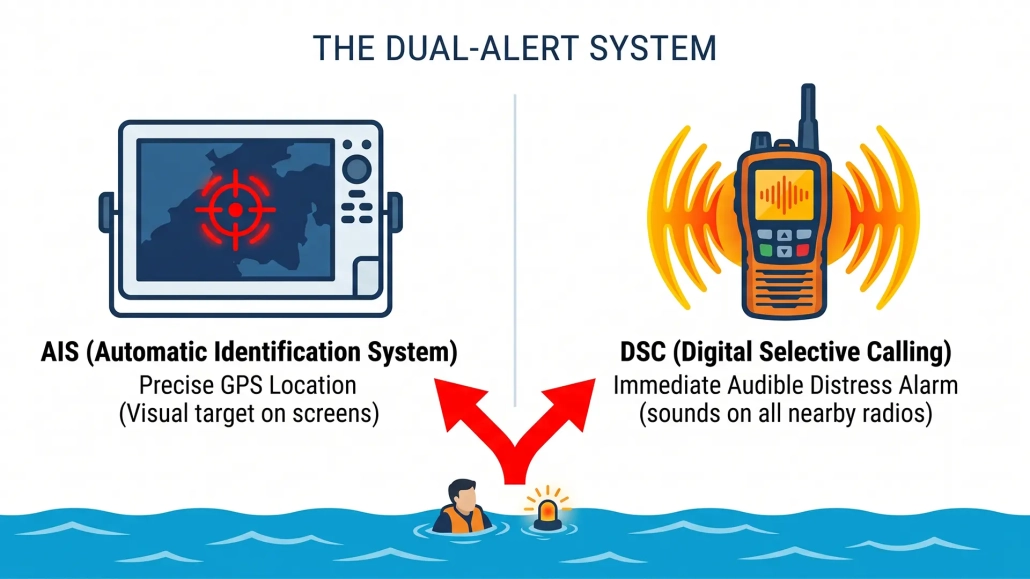
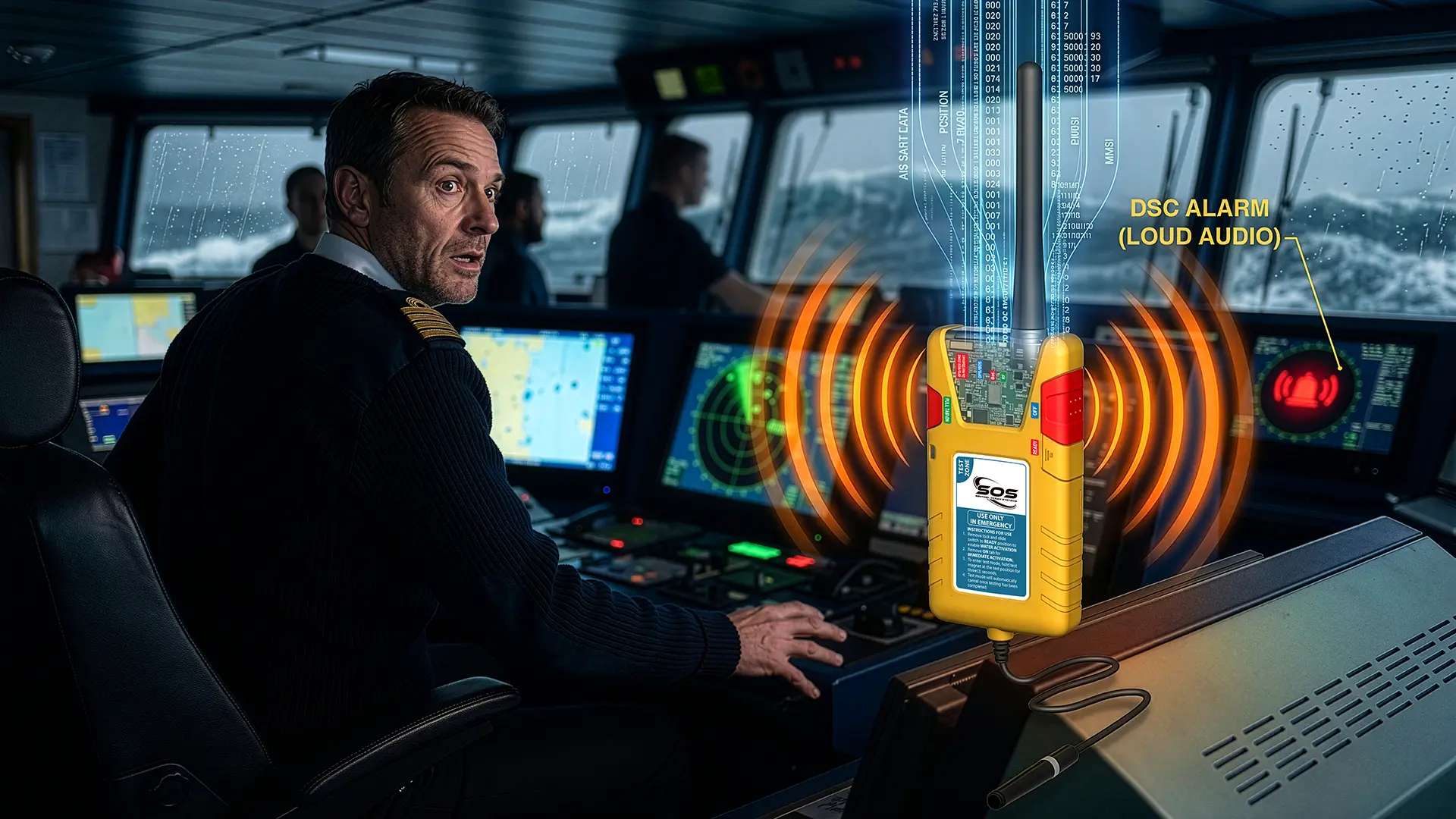
While AIS-only devices are excellent for precision tracking, they rely on someone actively monitoring the helm’s navigation screens. In rough weather or on busy commercial vessels, a silent visual alert can be missed.
The HJ9018 eliminates this risk. By incorporating Digital Selective Calling (DSC), it forces attention. The unignorable radio alarm ensures that neighboring vessels and your own crew are instantly notified the second you hit the water, drastically reducing reaction times. Furthermore, the HJ9018’s closed-loop and open-loop DSC capabilities allow for two-way acknowledgment, letting rescuers silence the audible alarm to coordinate the rescue while the AIS visual target continues to track your position.
Because of its failsafe dual-alert system and strict adherence to new global regulations, the HJ9018 is the standard for high-risk and professional maritime environments:
Commercial Shipping & Merchant Navy: Cuts through heavy radio and screen clutter in busy shipping lanes.
Offshore Energy (Oil, Gas, & Wind): Meets the stringent safety protocols required for rig transfers and offshore operations.
Commercial Fishing: Ensures crew safety in loud, chaotic, and high-risk deck environments.
Professional Ocean Racing & Offshore Sailing: Provides the maximum level of localized protection mandated by international offshore racing committees.


The HJ9018 is built rugged for the toughest offshore environments. It’s waterproof up to 10 meters. Compliant with major international standards. Trusted by professionals.
Arm the Device
Securely attach the HJ9018 to the oral inflation tube of your automatic lifejacket using the provided mounting bracket.
Deploy
Upon entering the water, the inflation and expansion of the lifejacket automatically triggers the beacon’s activation mechanism.
Transmit
The antenna deploys, the strobe begins flashing, and both the DSC audible alarm and AIS visual target are instantly broadcast to nearby vessels.

Deploy Antenna
Firmly grasp the red pull-tab and slide off the protective cover to release the antenna.
Press ON
Press and hold the clearly marked ‘ON’ button for 2 seconds.
Confirm
The high-intensity strobe will begin flashing, confirming the unit is live and actively transmitting both your DSC distress alarm and precise AIS coordinates.
(Note: Always refer to the complete user manual for detailed installation, testing, and repacking procedures.)
The HJ9018 AIS/DSC MOB Beacon ships worldwide. Check our distributors to order locally.
We noticed you are located in .
To save on shipping rates and delivery times, please order directly through our
authorised local distributor

 LJL901 AIS Lifejacket Light